

Ride With Power

Ride The Rough

Upgrade Your Journey


Ultimate Bike Guideline
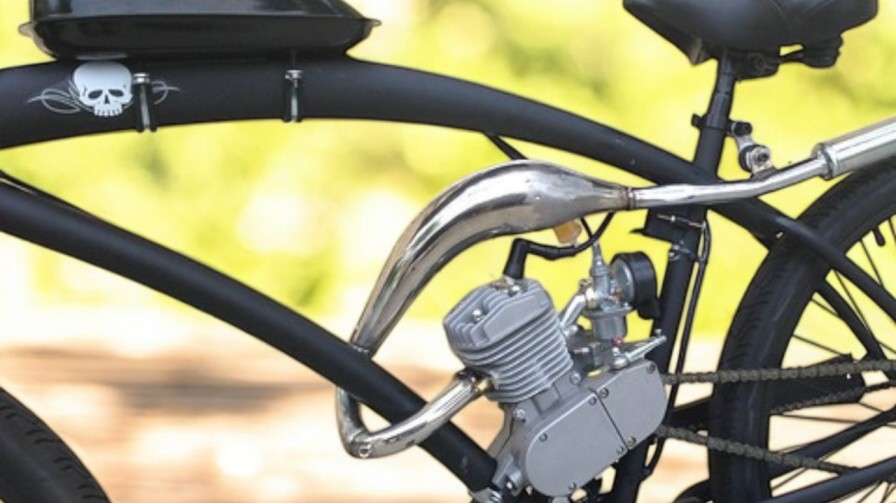
Gas bicycles are hotter than ever, and their popularity is exploding gas bikes deliver the fun and freedom of a motorcycle, while providing the economy and convenience of an urban bike.
First of all, one of the questions that men (mostly men) ask who want to buy or construct a gas powered bike is: “How fast can a gas powered bike go?”
The straight answer is, It’s relative to your engine size, tuning, weight, type of bike and the road conditions.
However, the majority of stock 2-stroke and 4-stroke gas bike engines only have speeds that go up to between 25 and 40 mph (40–64 km/h).
And some of these modified setups even go faster than 45, though that starts getting unsafe for an average bike frame.
This guide covers actual speeds, engine types and their differences, and how upgrades impact top speed as well as the safety margins riders will need to observe.
By simply bolting on our specifically designed load spreaders, to an average 80-100cc two stroke motor you should be hitting between 28-35 mph straight away.
This is the most widely used engine size in the world, and why a lot of people assume 30 mph is what they should be riding at gas bike speed.
The engines are lightweight, basic and offer quick acceleration so they are ideal for beginners.
In contrast, 4-stroke engines, most notably the very common or garden 49cc and 79cc kits tend to top out at slightly lower velocities, anywhere from 20 to 30 mph.
They’re smooth, quiet and reliable however not as aggressive sounding as the 2-strokes.
Because of a narrower RPM range they can’t go as fast, but many people ride them to work because they’re more durable.
It surprises many new riders that weight matters quite a bit.
But a heavier rider could see slower speeds than a lighter person, even when the power plant is identical.
Tire pressure, road surface conditions, wind resistance and altitude can all also affect your speed in a few miles per hour here or there.
Check How Fast Can a Gas Powered Bike Go?
Cubics, denoted 49cc, 66cc, 80cc or even 100cc are but part of the equation. Your top speed is more influenced by a much greater number of factors than most newcomers realize, the stock carburetor, exhaust, spark timing and even sprocket size.
For instance the most popular 66/80cc engine has a “sweet spot” at about the 28-32 mph range.
Overworking the engine without the necessary upgrades can overheat it or strain the piston.
In the meantime a properly tuned 100cc engine with proper carburetor jetting and a free flowing exhaust can cooly leave behind any sort or pedal bike on the road cruising at comfortable speeds between 38 and 42 mph.
Many riders seem to think that with a bigger engine comes more speed, but in fact it’s not always the case.
A shit-tuned 100 will never beat a monster-supreme tuned 66. It is tuning and setup even more than displacement that count.
That calculation will lead most people to choose between a 2-stroke and a 4-stroke motor. They each have personalities of their own.
Two-stroke engine power delivery occurs all in 1 revolution of the crankshaft allowing faster and higher RPM’s, and more cycle specific power handling.
For it, 2-strokes nearly always out run the same bicycle frame. They are lightweight, inexpensive and easy to customize. And that’s why the speed guys are on 2-strokes.
The 4-stroke provides power every second revolution and is generally smoother and a touch slower.
They’re great to cruise, make longer commutes and are reliable.
You won’t get the same top end, but many riders find them more useful in day-to-day life.
When it comes to top speed, if that is your aim, a 2-stroke wins, just about.
If comfort and longevity are of utmost importance, go with a 4-stroke.
Your rear sprocket size is one of the most influential factors when figuring out how fast you can go.
Most gas bike kits come with a stock sprocket ranging from 44 to 48 teeth. This size provides solid acceleration but restricts the top end speed.
Moving to a smaller sprocket, say 36T or 32T, does enormous things for the top speed, because instead of the wheel turning once for every rotation of the engine it will turn more.
The penalty is reduced takeoff power and less pull on a grade. 36T is what most speed-orientated racer use as it gives a nice value between acceleration and top speeds.
With this sort of construction, even a rudimentary engine can travel at possibly 35 or more miles per hour under the right conditions.
Conversely, riding with a larger sprocket increases torque and the hill-climbing potential at the expense of top speed.
Most 4-stroke kits have higher tooth sprockets that allow the engine to easily pull more weight.
If you ride a bicycle under real conditions, there are only a few things that speed can be.
It’s a fact an average “out of the box” 80cc 2-stroke motorized bike with top out at a maximum speed of about 30mph very fast, and with other upgrade such as a smaller sprocket or performance exhausts can reach speeds of up to 35-40 mph.
A stock 49cc 4-stroke gets about 22-28mph depending on weight and gearing.
Bigger carbs, improved intake and a performance exhaust can get that into the 30 mph zone but putting around the mid-high 30s is about as fast as 4-strokes get without crazy amounts of work.
Some riders take it even further, either with a jport for the cylinder, raising compression, or putting on a high flow carb and performance pipe.
These are of course extreme mods that maximise rev and the only reason I post them is to show what can be done rather than what should be done (these increase top end significantly but also add strain to the motor too).
A bike over 40 mph starts to become in a speed zone that deserves more of a small motorcycle or moped and less of an bicycle.
Many elements between you and the open road are affecting how quickly your gas-powered bike feels on the move.
The rider weight is one of the major factors; the lighter a rider is in comparison to another, the faster they will always go using an identical set-up.
Wind is a big factor, especially when it’s over 25 mph, above that point, drag spikes.
Rolling resistance is also effected (and likely even dominated) by tire pressure, wheel size and to a certain extent the tire tread pattern.
Slick road tires will give you an extra 2–3 mph over chunky mountain bike tires.
A well-oiled chain and a clean, adjusted carburetor are also new enough to make a huge difference in how the engine runs.
Altitude affects engine performance, too, the higher you go, the less oxygen a carburetor sucks into its maw, which can slightly sap an engine of power.
This is one reason some riders insist that their bikes feel faster on cold days. Cold air is denser and this helps to breathe more oxygen into the combustion chambers which creates more power.
Many beginners do not know that a bicycle with an engine is quite mechanically different than a motorcycle.
Bikes have more narrow tires, their frames are lighter and they often [have] less-sturdy braking systems.
Once you exceed 35 mph you move into a realm where a bit of wobble or rough road or instant brake pressure can cause a loss of control.
At very high speeds, the front wheel gets too nervous. This can result in a severe wobble called “speed shake.
That’s why most of the experienced builders I know advise, and plan, to keep your cruise speed down around 25–30 mph, only punching it higher when you’re in a situation with ideal control.
If you’re hoping to ride fast, it’s worthwhile having the grip strength necessary for stopping power and good tires quality as well as a stout frame.
The safest frame type is a steel mountain bike frame, as aluminum frames can crack do to the constant vibration of an engine.
In many areas, gas-powered bikes are subject to legal restrictions.
In some places, they must be capped at 20 or 25 miles per hour, in others, anything faster than that is defined as a moped or motorcycle and therefore subject to registration.
Laws will differ depending on country and state, but you should familiarize yourself with local laws before making high-speed alterations.
Even when relaxed, laws aside, riding at extremely high speeds on public roads is hazardous.
Don’t forget to put safety equipment, including a DOT-approved helmet, gloves and reflective clothing as top priority.
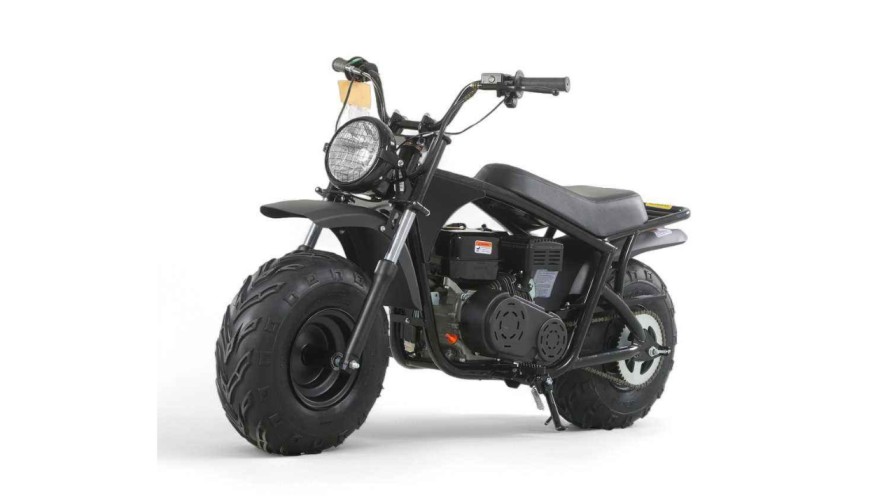
If you want more speed, the easiest way is to improve your engine’s breathing, combustion and gearing.
High performance carburetor for optimal power flow and high flow air filter that increases air intake.
A decent expansion chamber on a 2-stroke motorcycle will certainly increase the power band, but will also help low-end and midrange power.
Switching to a smaller tooth-count sprocket on either end eases the burden on the engine but also raises your bike’s top-end capabilities.
In addition to directly improving speed (due to less mechanical resistance on the bike), it also lets you keep your motor well-tuned, the chain oiled up, and the frame tight.
Tiny upgrades done right can often matter more than attempting radical overhauls.
So what’s the top speed of a gas bike? For an average rider with a stock set up, 28-35 mph most riders, if you upgrade your engine, I’ve found 38-40mph comfortable.
Some of the most radical builds are even faster, but that’s when you start to get into the unsafe territory for a bicycle frame.
For top speed, the actual final speed, there is absolutely nothing that does more for you than engine size and set up, it matters way more then weight.
A gas bike makes for a fun, practical and liberating present.
Regardless of whether you’re using a motorized bicycle for commuting or adventure, it’s important to know how speed works to ride safely and get the biggest performance boost out of your two-wheeled machine.